Check capacity and support
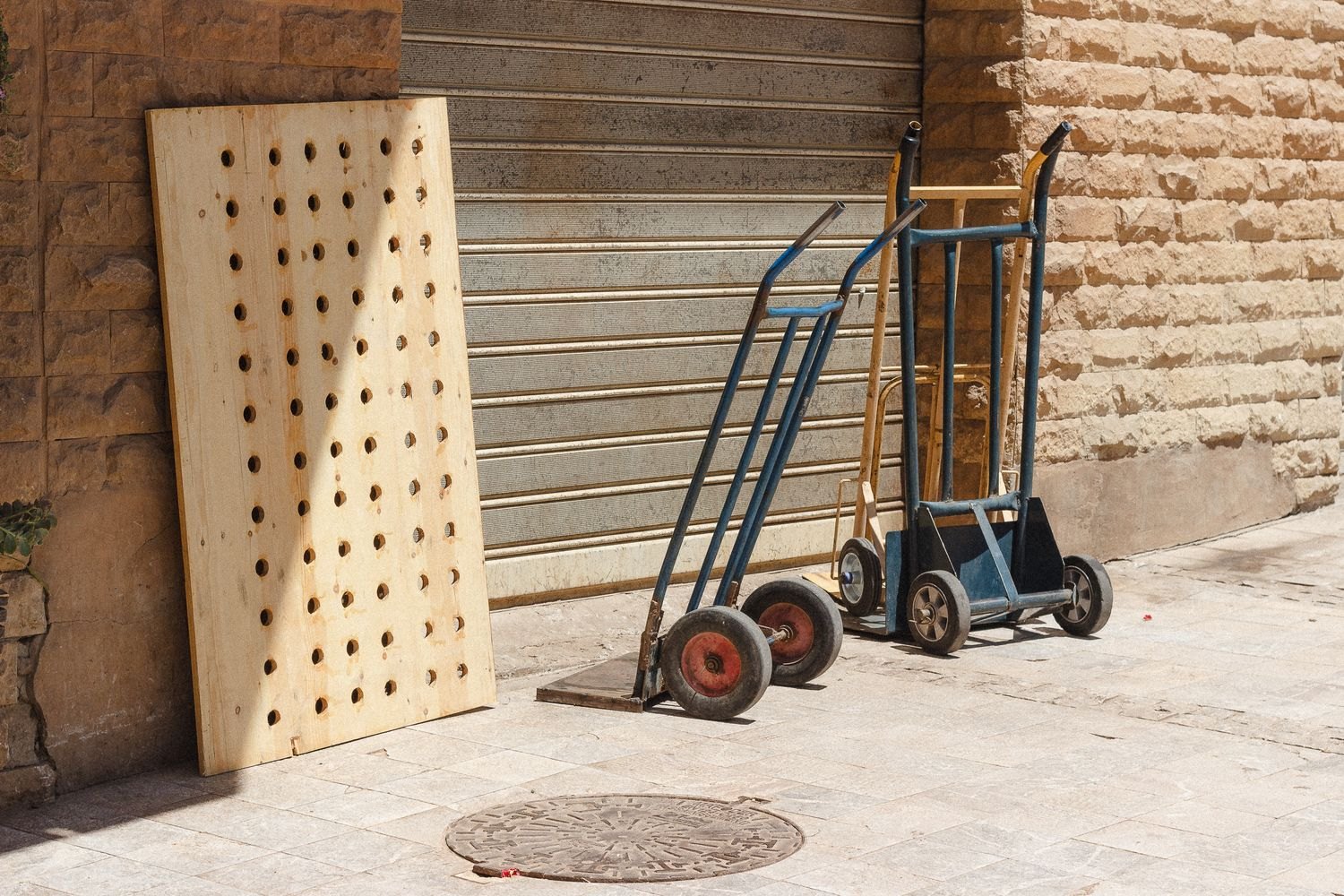
Read the dolly manufacturer's guidance and inspect the platform, wheels and fittings. A printed load capacity does not override damage or unsuitable loading. The furniture needs stable support without delicate base panels, trim or projecting fittings carrying its weight. Tall, narrow items may sit poorly on a small platform.
Plan how to place the furniture on the dolly and remove it at the other end. The dolly does not eliminate those steps. If lifting it onto the platform is already difficult or unclear, adding wheels alone will not solve the problem. Choose another method with experienced helpers or a professional mover.
Read the route as a wheeled path
Check joints, thresholds, loose rugs and soft sections of flooring. Small wheels can catch on obstacles that are barely noticeable on foot. Remove loose objects and secure suitable floor protection so that its edges cannot bunch up. Clear the turning space too: furniture can fit along a straight stretch and still hit the wall when changing direction.
This approach concerns level routes. Stairs, slopes and improvised ramps require a different assessment and suitable equipment. Do not try to pull a loaded furniture dolly over steps. The sudden movement changes the load and is difficult to control.
Move slowly and respond promptly
Agree on the direction and on one person who will call stops. Start gently and move the furniture slowly. Keep hands and feet away from wheels and possible trapping points. If a wheel jams, stop and remove the cause; extra momentum is not a solution to an unknown obstruction.
Have the receiving area clear before arriving. Prevent unexpected rolling while the load is removed using the planned method. Afterwards, inspect the wheels and floor for trapped grit. This avoids dragging a small problem back along the return route. Store the unloaded dolly away from the main walking path.