Choose a clear preparation area
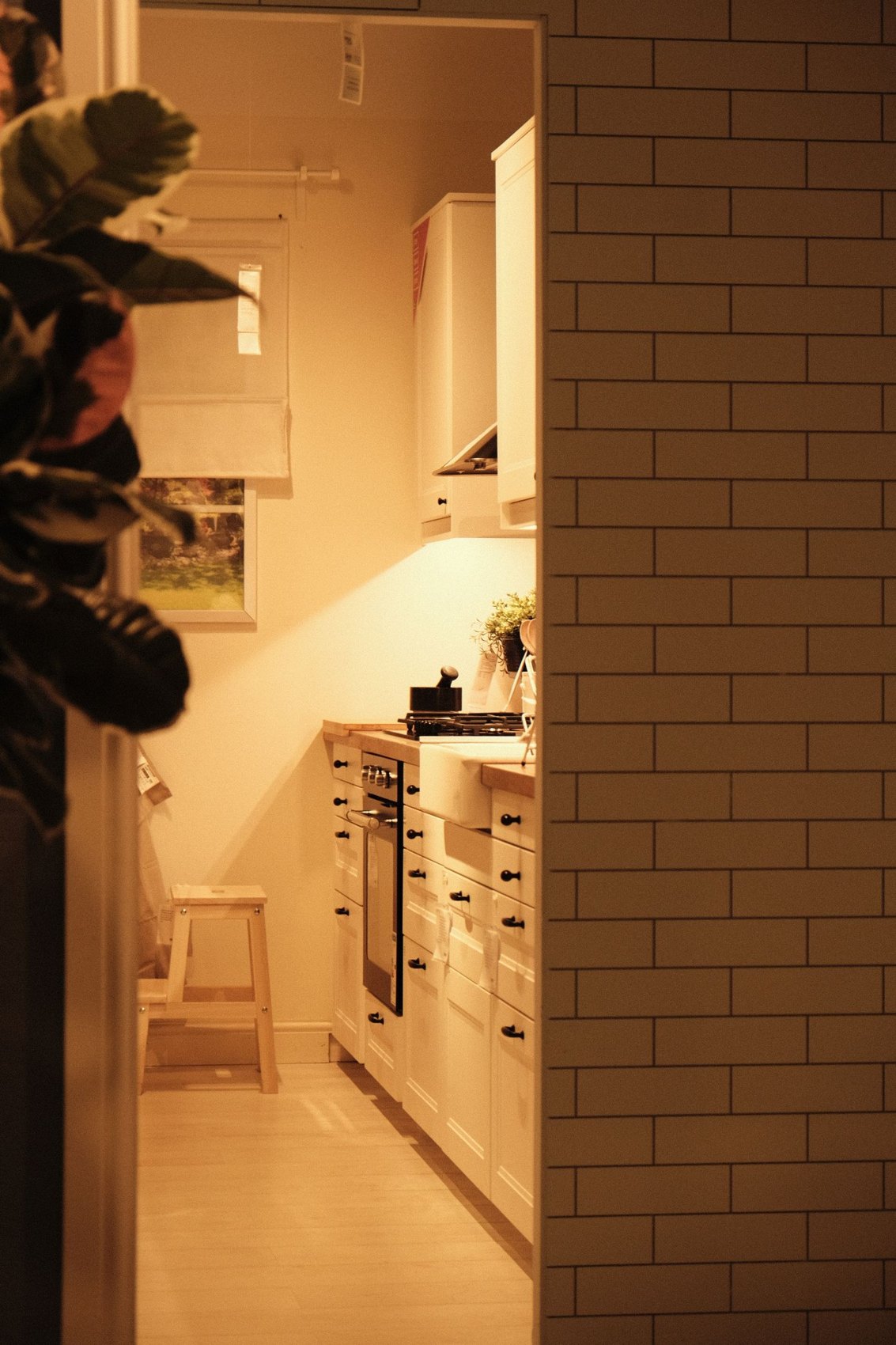
Reserve one continuous surface for preparation and keep it mostly free. Occasional-use items do not need to live there permanently. Check whether drawers and appliance doors can open while someone works at the surface. An extra trolley helps only if it does not narrow the route or block access to equipment.
Group tools around the task
Keep boards and frequently used tools close to the preparation area, each stored appropriately and safely. Pans can sit near the cooking area without requiring anyone to reach across hot or moving parts. Crockery often works well close to the route used when emptying the dishwasher. Test the arrangement with the actual doors open.
Heavy appliances need stable, accessible surfaces within the stated load limits. A machine lifted down from a high shelf every time may need a different home. Always preserve the appliance manufacturer's ventilation and positioning requirements.
Make deep cupboards readable
Put frequently used food at the front and clearly identified reserves behind it. Small baskets can hold groups together, but should not be filled so deeply that only the top packet is visible. Keep original information about contents, dates and storage readable. Do not decant food simply for appearance if important information will be lost.
Use suitable shelf inserts within their load limits and avoid unstable stacks. Check that items at the back remain accessible. Extra capacity on paper is not useful if four pans must be removed to reach the one you need.
Test it with a meal
Cook a familiar, simple dish and notice unnecessary journeys. Change only two or three positions afterwards so you can see the effect. Keep a small area available for arriving groceries and put them away promptly. An organised kitchen does not require a container everywhere; less content in the right places often helps more.