Match the surface to the task
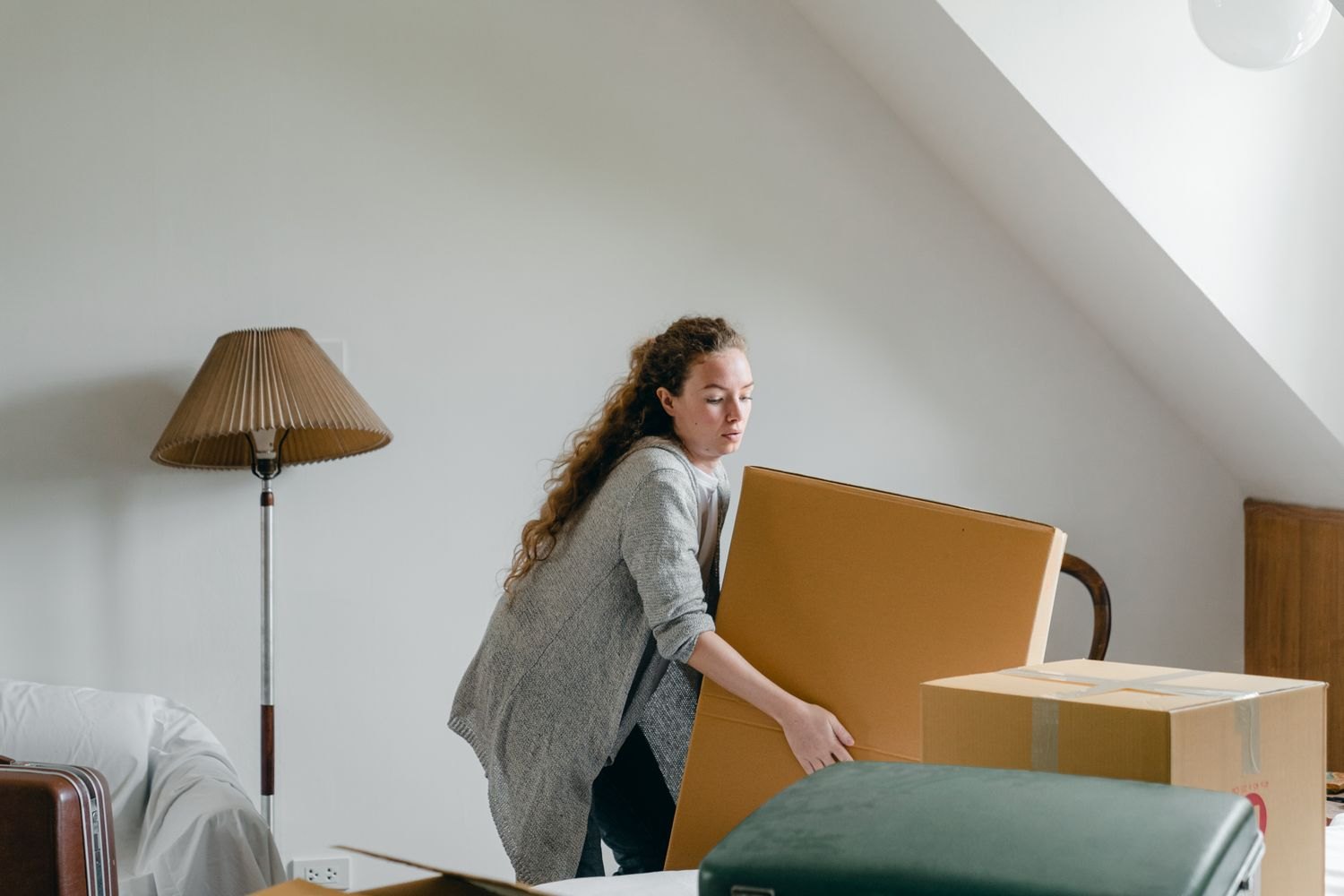
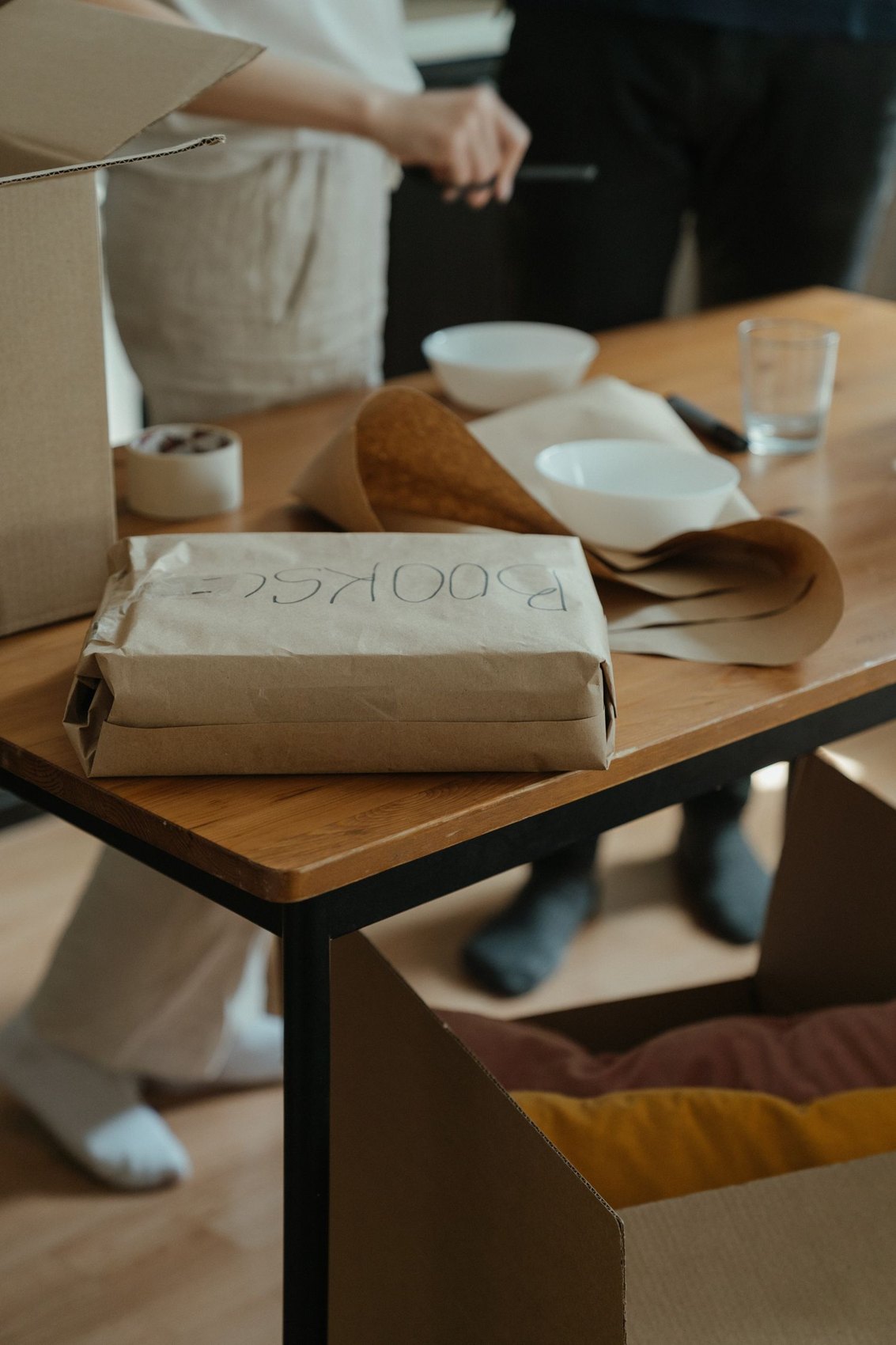
Choose a stable work surface with enough room to turn and wrap objects. A cleared table can suit small and medium belongings if it can support the task. Protect the surface with a suitable clean covering. Do not lift very heavy items to table height simply because space happens to be available there.
Keep the route between the station and the finished-box area clear. Open drawers, trailing cables and scattered paper do not belong in that route. Good lighting helps reveal small accessories and damage early. Keep drinks away from the clean wrapping surface.
Create three clear areas
Checked belongings wait on one side. Wrapping and cushioning happen in the middle. Finished packaging and labels are prepared on the other side. If space is limited, labelled baskets can provide the same separation, provided they do not obstruct walking routes themselves.
Give tape, a pen, labels and suitable cutting tools a dedicated small container. Return sharp tools to a safe position immediately after use. Constantly searching for a pen slows packing more than an extra supply of decorative labels could ever improve it.
Reset the station after each box
Label a finished box before starting the next one. Clear scraps and check whether small parts remain on the work surface. Put enough clean material within reach again. This brief finishing step prevents several half-packed boxes competing for the same accessories.
Pause if completed containers build up around the table. Move them to the designated dry holding area and keep their destination labels visible. A packing station works only when the next stage of the process has room as well.