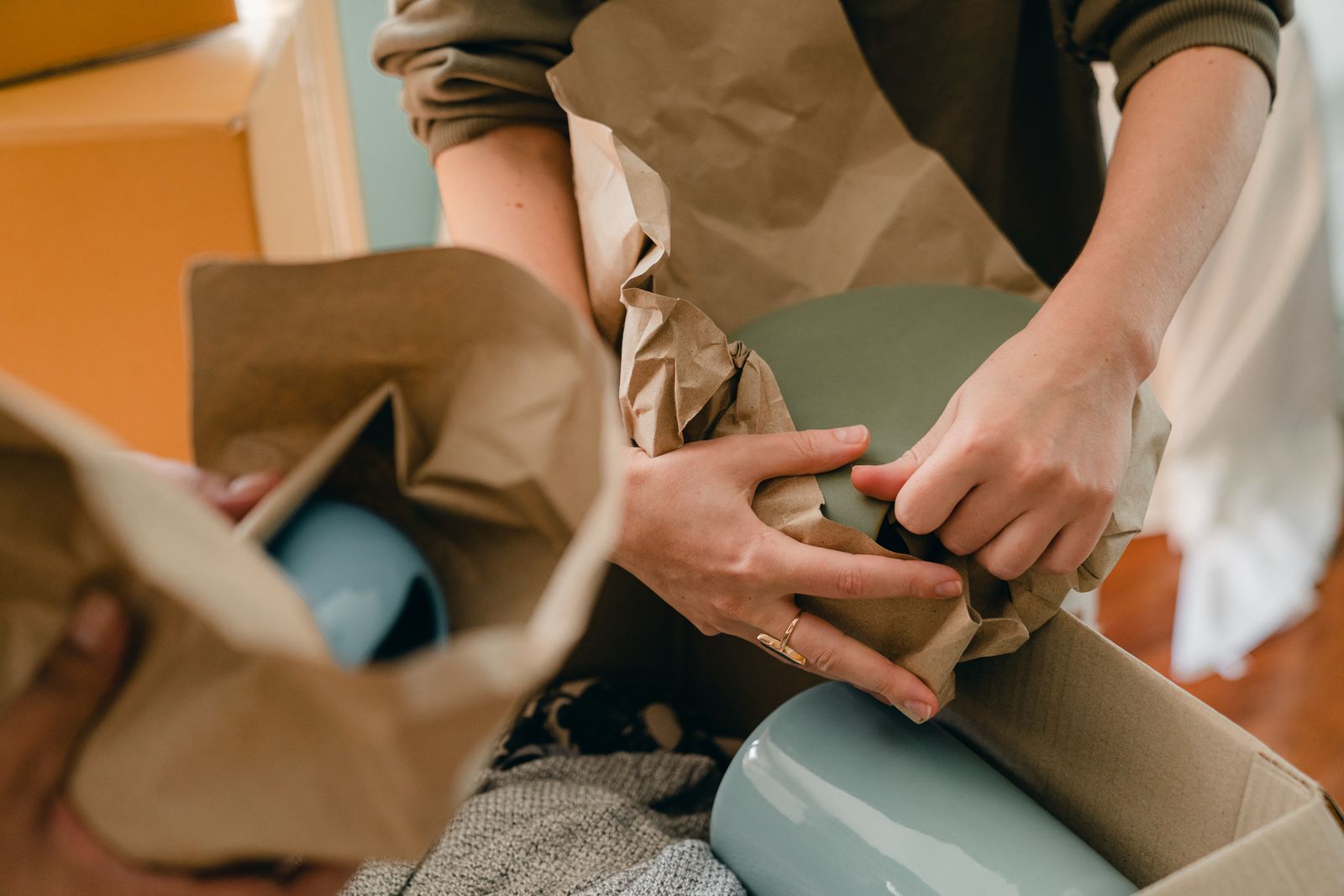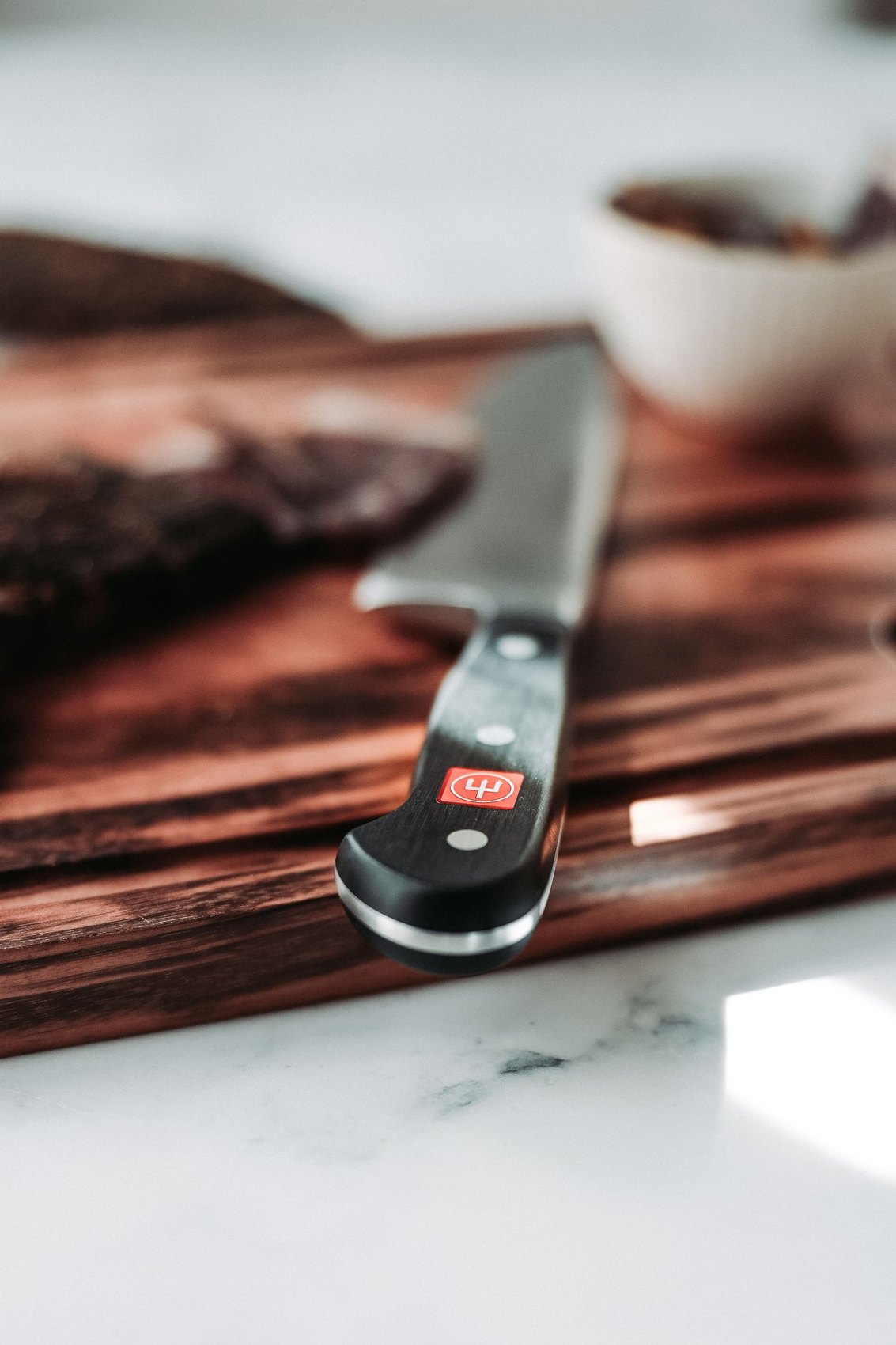
Work on a clear surface
Clear the packing area and keep other activities away from it. Set knives out individually, clean and dry, with their handles clearly visible. Keep children and pets out of this work area. Prepare suitable guards and packaging before starting so you do not need to search for materials while holding an unprotected knife. Never reach into a mixed drawer box whose sharp contents have already disappeared beneath paper.
Cover the entire blade
Use appropriate snug-fitting blade guards or a purpose-made knife roll offering suitable protection. The tip must not project and the cover should not detach with gentle movement. Paper can provide extra separation but cannot replace a puncture-resistant cover. Keep adhesive tape off the edge and handle surface. If a guard does not fit, obtain an appropriate solution instead of simply wrapping the blade in a thicker towel.
Use a dedicated closed container
Arrange protected knives so their handles are orderly and obvious when the container is opened. They should not move loosely among wooden spoons and other kitchen items. Use a knife block for transport only if knives can be secured appropriately within it; open slots do not reliably retain them when tilted. Separate knives and block where necessary. Fill outer-container gaps without pressing on tips or fastening mechanisms.
Label and unpack deliberately
Mark the container “Kitchen knives – open carefully” and add its destination room. Keep it away from everyday essentials boxes into which someone might reach casually. Open it on a clear surface and remove every knife by its handle. Collect packaging only after all knives have been counted and placed safely. Anything not immediately needed should retain its guard and go to an appropriate storage location.