Identify the vulnerable areas
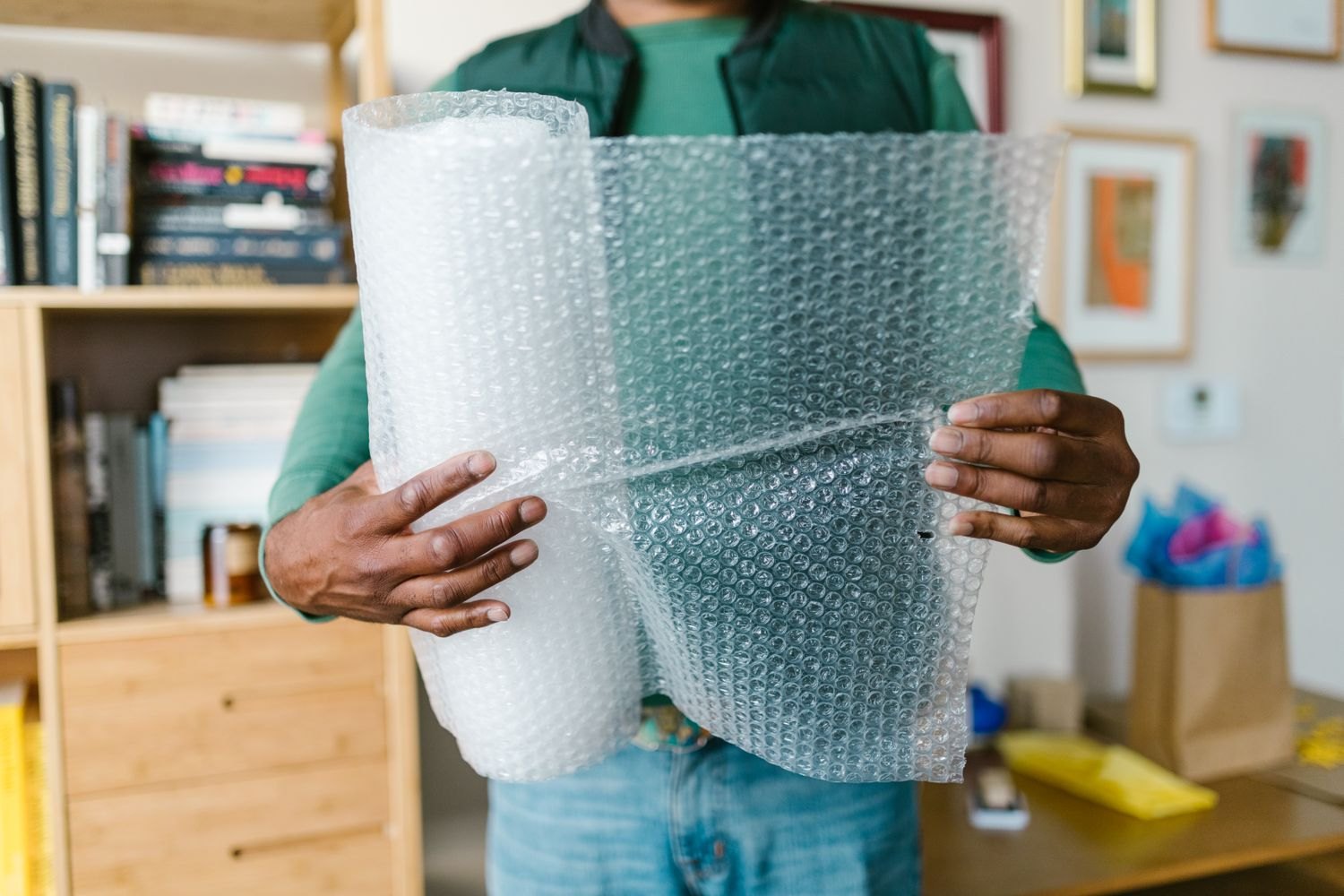
Look at corners, projecting handles and narrow joins. An evenly fitted protective layer can help around these points. Avoid isolated thick lumps that create pressure elsewhere. The wrapped object should fit its intended space without being forced into position.
Surfaces that mark easily may first need an appropriate clean separating layer. Follow the manufacturer's surface-care and packaging instructions. Ordinary bubble wrap is not automatically suitable for exposed electronic components either; those may require specialist anti-static materials.
Secure the wrapping without taping the object
Hold the covering together with a small amount of suitable tape that sticks only to the packaging. Do not stick it directly to paint, wood veneer or delicate finishes. An easy-to-find folded tape tab makes later opening simpler without cutting close to the object.
Then check the fit inside the box. Even a softly wrapped vase may be damaged if it can roll around a large container. Extra supports or a better-fitting box can matter more than another layer of wrap.
Judge reuse by the condition
Clean wrap with intact air pockets can be reused for similar tasks. Heavily flattened areas do not offer the same cushioning as undamaged sections. Cut useful pieces in manageable sizes and store them dry, instead of keeping a bag of confusing tiny scraps.
Do not automatically wrap every towel, book or robust kitchen utensil in plastic. Clean textiles, paper or suitable separation may be enough for those jobs. Keep packaging and loose plastic film beyond the reach of small children and pets while working.