Sort one group at a time
Gather related items such as building blocks, vehicles or pretend-play supplies. Keep complete games with their own pieces. Check damaged items and follow age guidance for small parts, especially where children of different ages share the room. Storage must suit the children who actually have access to it.
Include children in simple decisions: which group is used often, which rarely and which things are usually played with together? An adult system that strictly separates animals from the farm may create unnecessary searching during play. The categories can therefore be individual to the household.
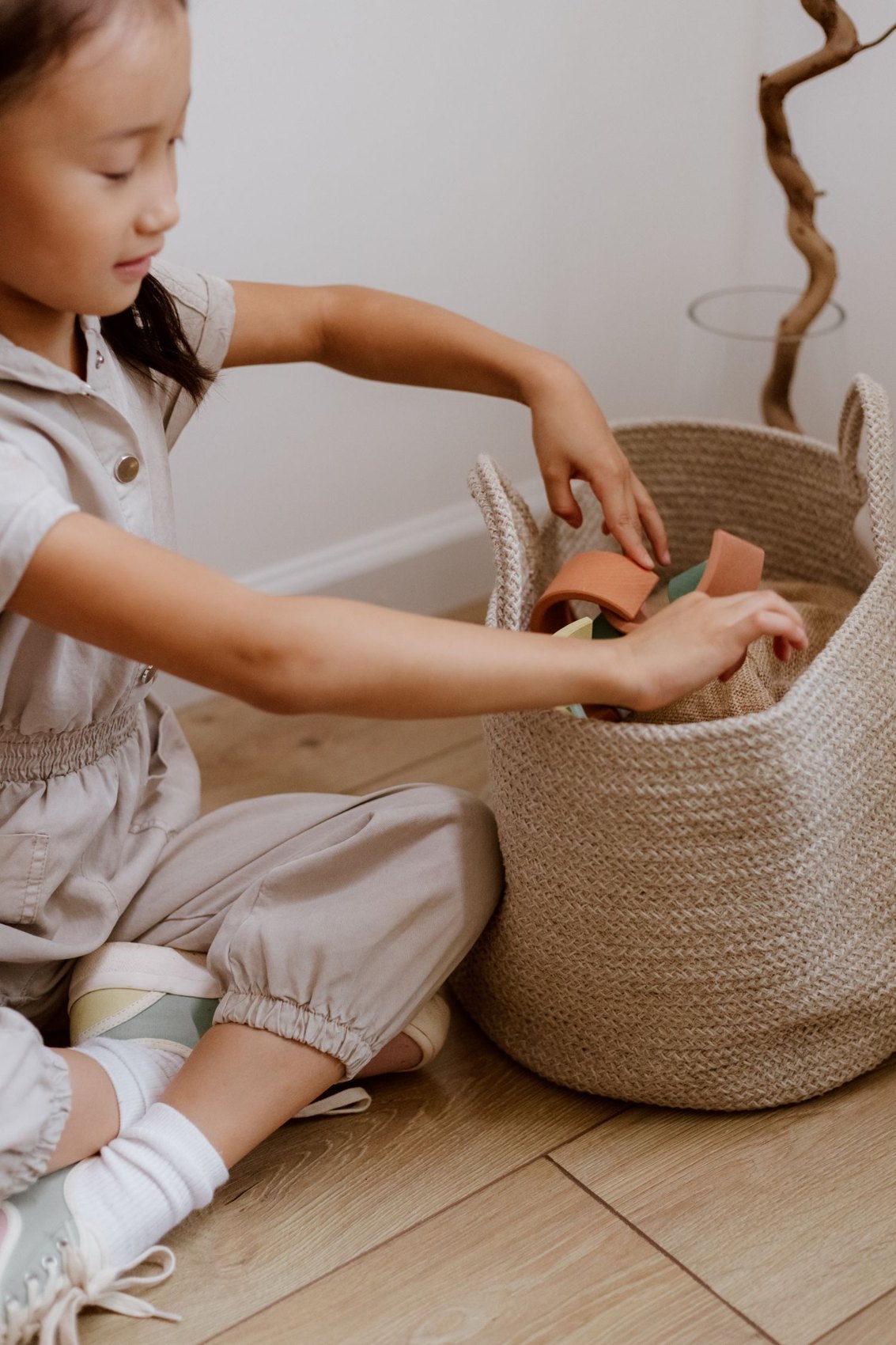
Choose containers for their contents
Use low, stable containers whose contents can be seen without deep rummaging. Limit the quantity so a filled container remains manageable. Large, heavy boxes should not sit high above the play area. Assemble and secure furniture as required; children should not need to climb to reach regularly used toys.
A picture label may work better than a long word. Photograph a few representative pieces and attach the image where it is visible. The label does not need to show every item, only help with the decision when returning something. Small accessory sets need an appropriate separate container within their wider group.
Change the selection without a rigid system
If space is limited, some rarely used toys can spend time in another suitable storage place. Record the contents and keep those boxes accessible to adults. Make changes according to interest rather than a fixed calendar. Frequently loved items can remain available instead of disappearing merely because a rotation schedule says so.
Plan a brief shared tidy-up at a useful point in the day. Unfinished constructions can have a clearly limited place to stay out. If one group repeatedly lands in the wrong box, adjust its label or position first. A working system lets things be returned without a lengthy explanation.