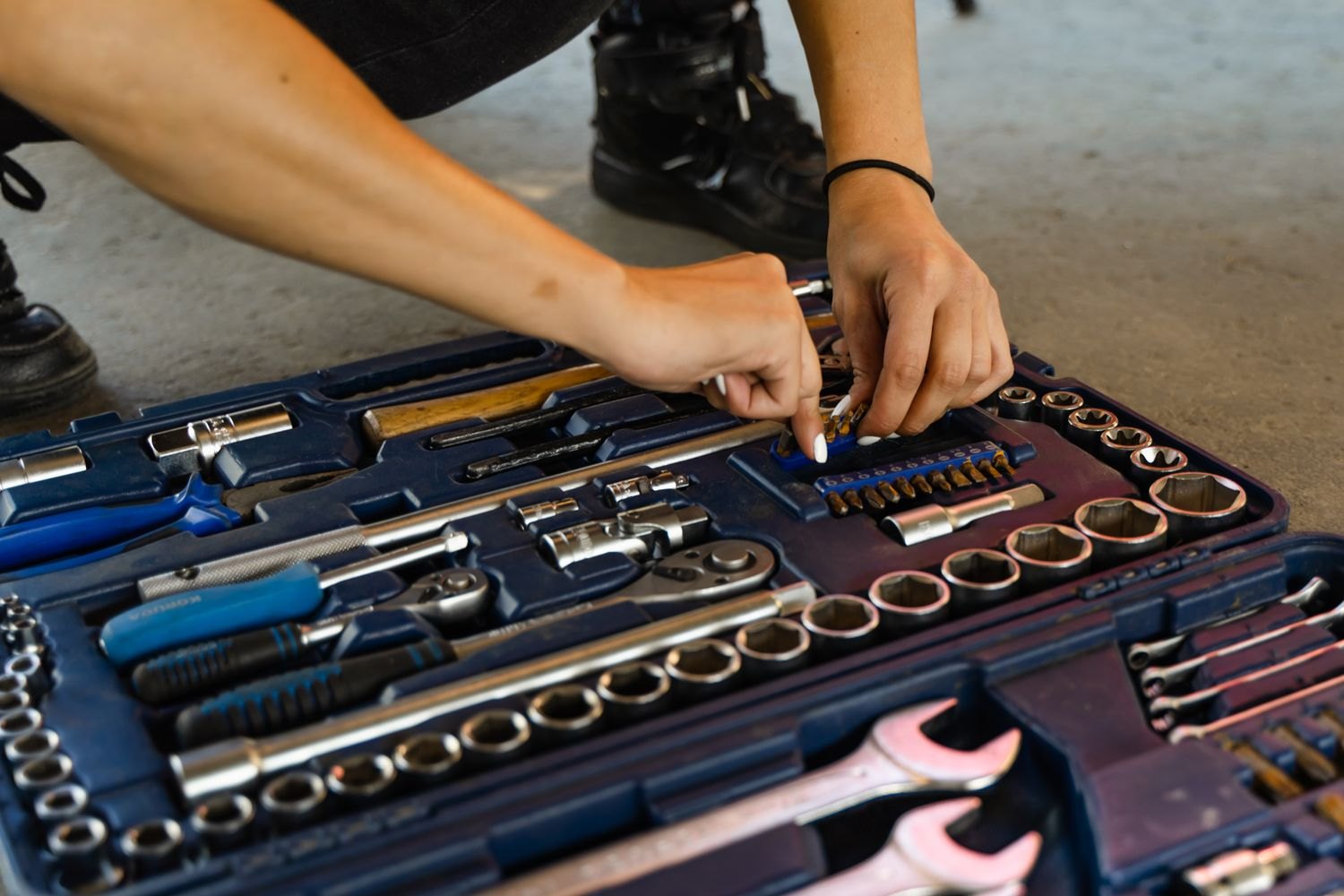
Keep the immediate-use kit deliberately small
Set aside only tools suited to the furniture work you actually plan to do. These might include the correct screwdrivers, a suitable spanner and a tape measure. Check required sizes against the furniture or its instructions beforehand. A large supply of unsuitable bits is less useful than a few clearly matched tools.
Removed screws and fittings need separate labelled bags. They belong with their particular furniture item, not loose in the bottom of the tool box. A small empty container at the work area can hold temporarily removed parts before they disappear beneath paper or packaging.
Secure sharp and heavy items
Use existing suitable protective caps and tool holders. Cutting edges should not be able to push through thin bags or cardboard walls. Position heavy tools low and distribute them so the box does not suddenly tilt to one side when lifted. Lightweight small parts can sit above them in closed compartments.
Check the container's handle, hinges and fastenings. A box with a broken lid catch is not suitable merely because it previously sat safely on a shelf. Follow manufacturer transport and storage instructions for powered tools, batteries and accessories. Do not casually add unidentified liquids or damaged batteries.
Plan access at both addresses
Clearly mark the day's kit and load it where it remains accessible if needed. Someone who must remove one last screw before departure should not have to unload half the vehicle first. Return each tool to its intended place after use.
At the new home, keep the kit clear of walking routes and inaccessible to children. Open it on a stable surface. Before putting it away, check that borrowed tools are accounted for and that no furniture-fittings bag has accidentally remained inside.