Start with clean contact surfaces
Wash and dry cookware completely. Remove crumbs or hard residue that could act like grit between two surfaces. Check loose handles and already damaged lids. A handle that seemed unremarkable during cooking may catch another item while packing. Make repairs according to suitable manufacturer guidance rather than substituting tape. Set delicately coated pieces aside so they do not accidentally become the bottom of a heavy stack.
Nest compatible shapes loosely
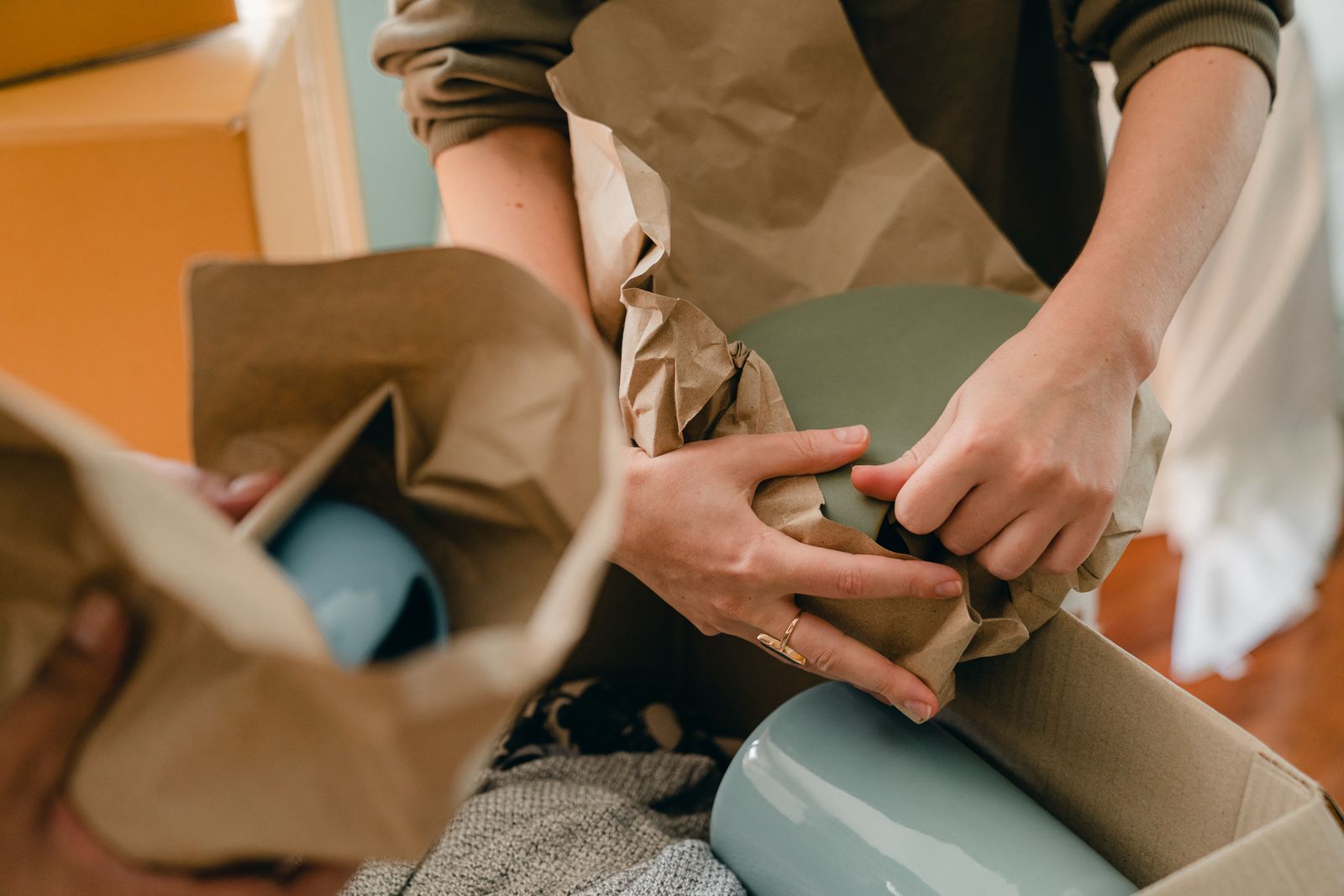
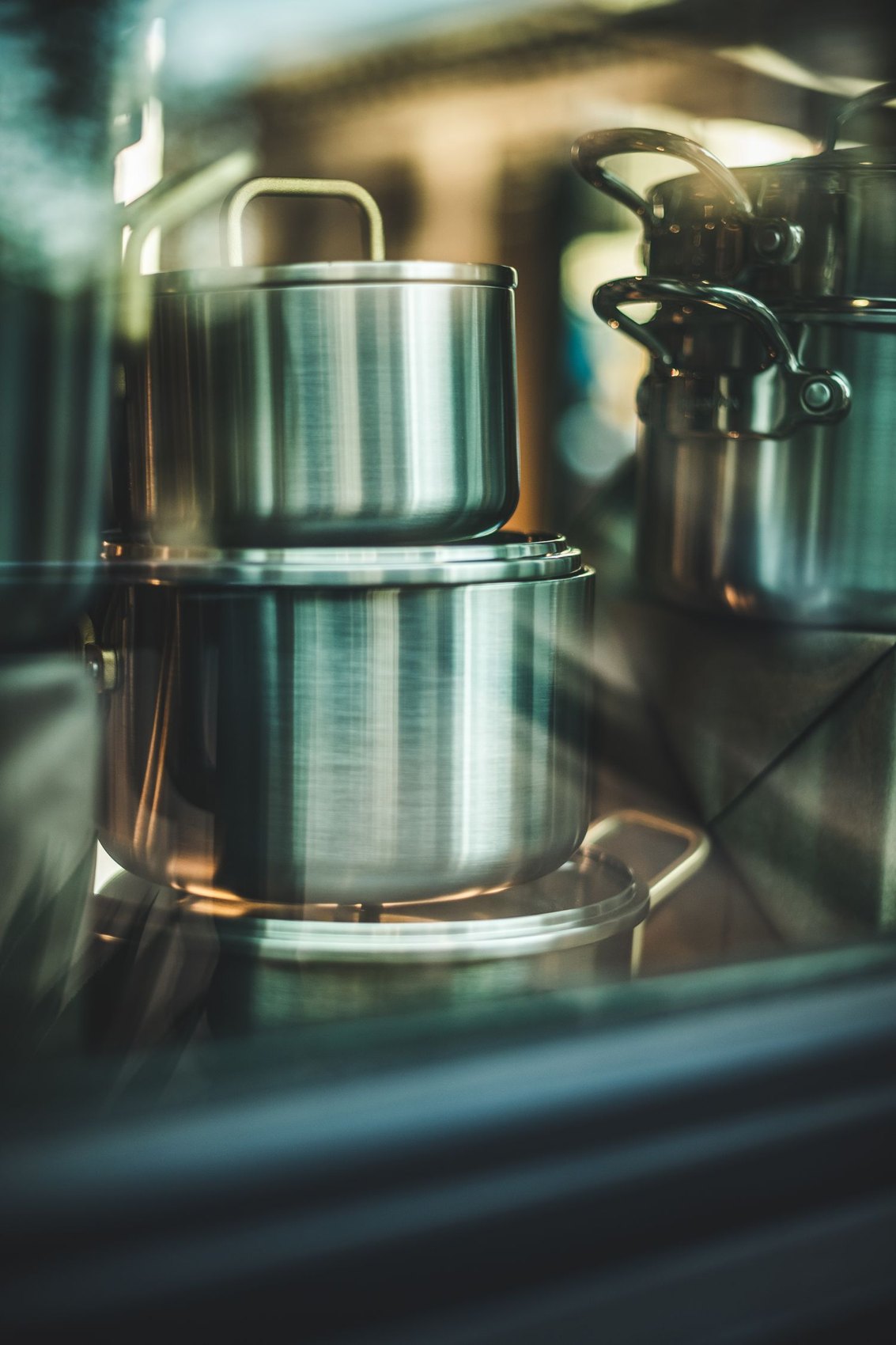
Nest only pots that fit without catching or jamming. Place clean paper or suitable soft material between bases, rims and sides. The separator should not mean forcing the inner pot into place. Small gaps are preferable to tightly trapped handles. Protect sensitive frying-pan interiors with their own layer, and do not leave hard lid knobs or cutlery loose inside them where movement could scratch the cooking surface.
Allow for lids and handles
Wrap glass lids separately, protecting both their edges and projecting knobs. A lid does not automatically remain secure when left on its pot during transport. Arrange wrapped lids so no concentrated weight bears on the glass. Long frying-pan handles must not press through the box or act as levers under tension. Choose another box if necessary rather than wedging a handle diagonally between heavy objects.
Keep the box manageable
Distribute heavy cookware across several small boxes and cushion the arrangement against movement. Spare space is not a reason to add another cast-iron pan. Label the contents and keep a basic cooking set separate for immediate use. When unpacking, remove nested pieces individually. Do not pull the whole stack by the upper handle if other pots or wrapping remain caught underneath and could unexpectedly come with it.