Sort by structure as well as owner
Group crease-prone shirts, structured jackets, knitwear and durable casual clothing separately. Check care guidance if a material is sensitive to pressure. Heavy garments should not sit on delicate fabrics. Keep belts, jewellery and small accessories apart so they cannot snag or scratch anything. Empty pockets before folding; a forgotten pen or key can quickly undermine otherwise careful packing and damage neighbouring garments.
Fold or roll gently
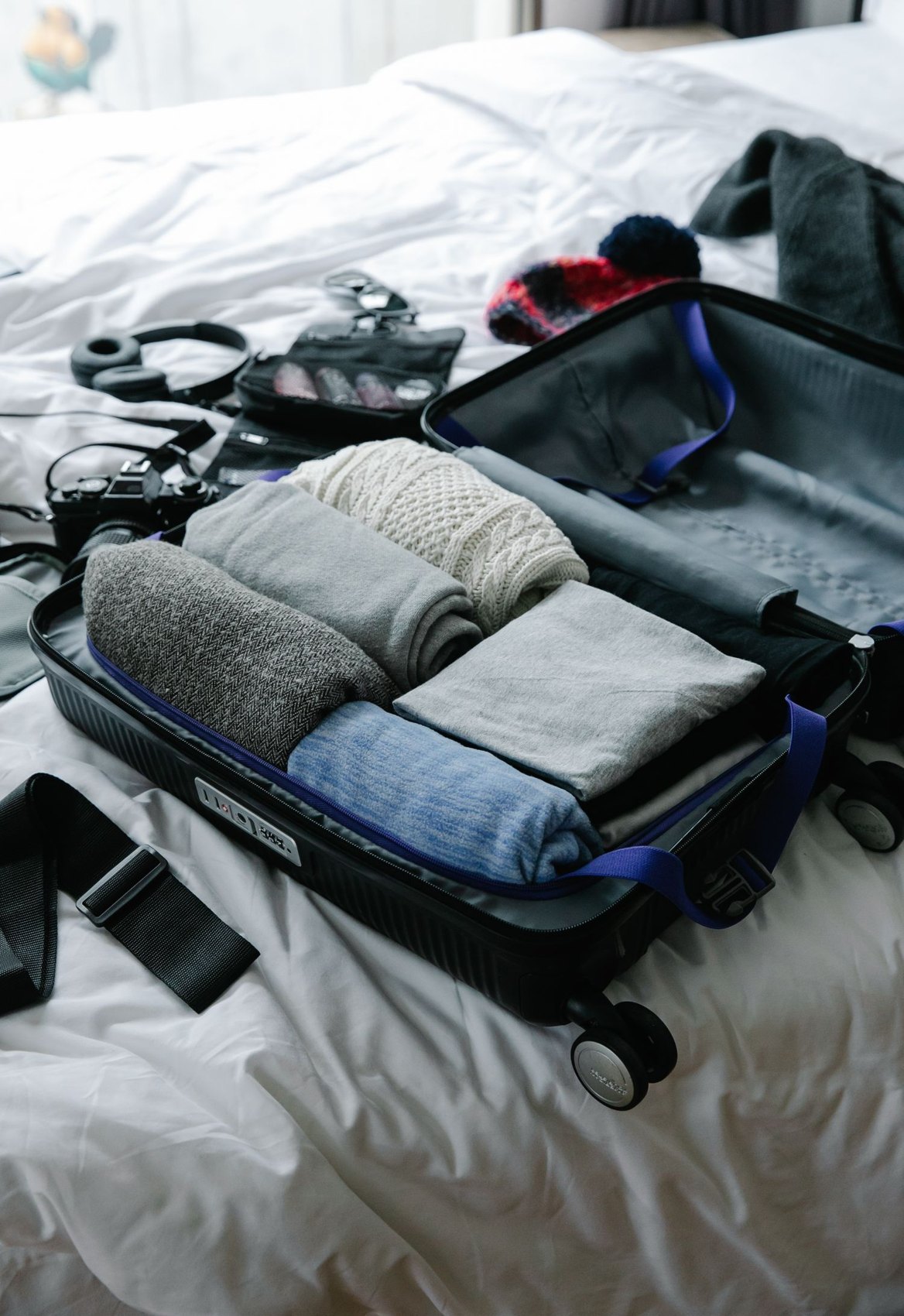
Fold shape-sensitive pieces along natural lines and place them in a clean container without strong compression. Robust T-shirts and simple sportswear can be loosely rolled if that suits the material. Rolling does not guarantee freedom from creases and should not become a way to squeeze in the maximum possible amount. Give first-week clothes their own bag so you do not disrupt the whole arrangement to find one top.
Choose hanging transport selectively
A suitable wardrobe carton can keep suits or delicate jackets on their hangers. Check the capacity and fitting of its rail and avoid overloading it. Garments need enough length to hang without being crushed against the base. A thin bag slipped over clothes provides dust protection but does not replace a firm transport container. Hanger hooks must not project freely among other belongings or damage surrounding surfaces.
Distinguish compression from storage
Vacuum bags can save space for suitable textiles, but they are not a universal answer for delicate shapes or extended storage. Follow material guidance and never seal in residual moisture. Unpack clothes promptly and return them to normal hanging or folded storage. If the wardrobe is not ready, arrange a clean temporary location rather than leaving compressed bags stacked indefinitely in a damp corner of the new room.