Prepare small groups
Sort by format and approximate weight first. Large illustrated books need a different arrangement from slim paperbacks. Remove important loose papers and keep them separately. Bookmarks can remain if they are not hard objects or project excessively. Use the sorting stage to identify borrowed books. Label that group clearly rather than having to search several newly arranged shelves for someone else's book after the move.
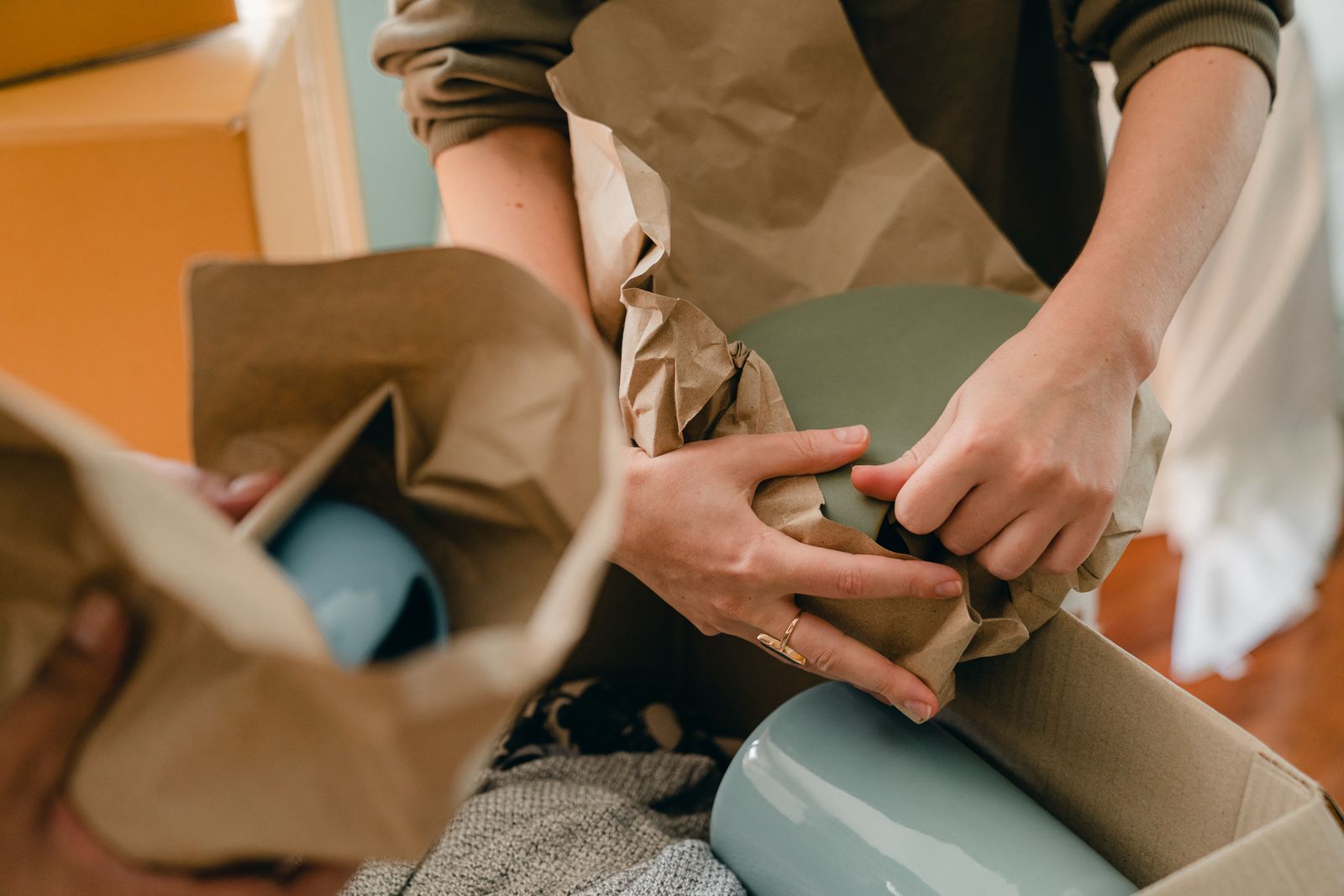
Protect covers and edges
Put clean paper between surfaces that could rub. Stand books upright as on a shelf or lay compatible sizes flat without loading page edges at an angle. Do not force different heights into one tightly compressed row. Heavy books should not sit on delicate smaller editions. Rare, damaged or particularly valuable volumes need individually suitable packaging; general moving advice cannot replace appropriate conservation advice for those items.
Check weight before the box is full
Test whether the box remains manageable while packing, not only at the end. A printed load rating is not a recommendation for how much one person should carry. Once the weight is sufficient, fill remaining space with suitable lightweight cushioning. Do not add books just because a gap remains. Handles and the base need to be sound. An open bag is quick to fill but protects corners and spines less reliably.
Keep shelf groups identifiable
Label boxes by subject or destination shelf, such as “Fiction A–F” or “Study reference books”. Give anything needed soon its own small group. Keep boxes dry and off potentially damp cellar floors. Open them near the destination bookcase. Before filling it, check that the shelves are correctly installed and suitable for the intended load, rather than discovering a missing support after the books are in place.