Keep packaging identifiable
Place products on a suitable surface and check for secure closures, readable labels and damaged containers. Follow their storage and usage instructions. Do not transfer cleaning liquids into drink bottles or unlabelled decorative containers. Original packaging preserves information that other household members must also be able to recognise and understand.
An unidentified remainder should not return among everyday supplies. Consult available product information or an appropriate local advice service about handling it. Never combine leftovers to save space. Deal with unusable packaging according to applicable guidance rather than turning a sorting task into an experiment involving several different liquids and uncertain contents.
Plan position and access together
Choose somewhere consistent with storage instructions and separate from food. Consider children, pets and anyone else with access to the room. A high shelf alone does not necessarily provide sufficient protection. Use suitable secured storage where your household requires it, and make sure that protection remains closed between uses.
Arrange frequently used products with labels visible. Keep bottles upright without squeezing them between other objects. A suitable removable tray can make the shelf easier to clean, but does not replace an intact closure. Store only products whose instructions allow that arrangement together; a decorative appearance is a secondary consideration.
Separate equipment from supplies
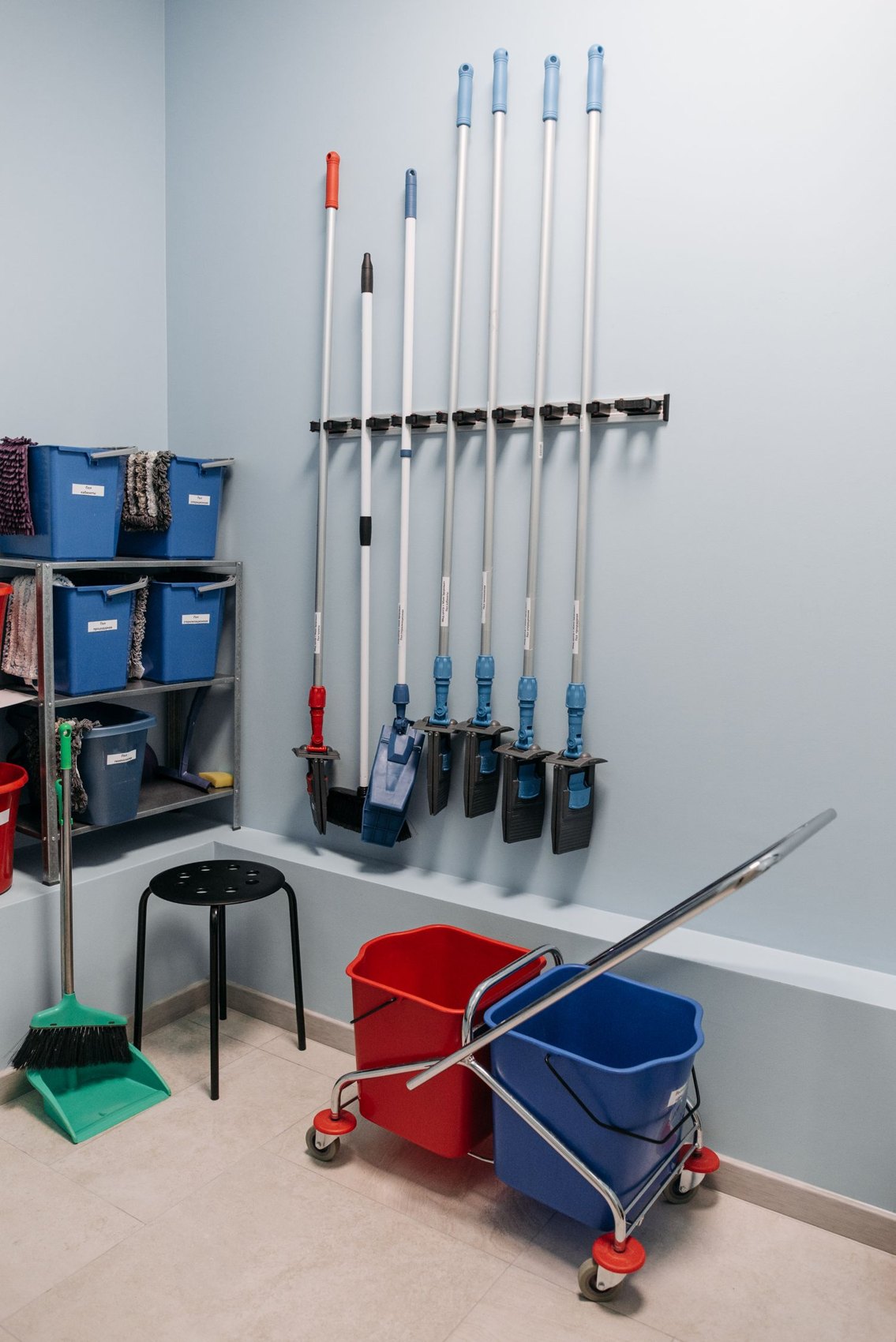
Give cloths, brushes and other equipment their own sections. Let damp items dry appropriately before returning them to enclosed storage. Keep heavy buckets stable and clear of doors. Position long handles so they cannot fall towards you when opening the cupboard or become entangled with the supplies beside them.
Put new products behind equivalent existing supplies where condition and instructions permit. Note opened packs before buying replacements. Occasionally check for leaks or hidden labels.